Kick the Buddy: Second Kick
- 4.3
- Rating
- 100.00M
- Installs
- Free
- Price

 Analysis by App-foxy
Kick the Buddy: Second Kick is the kind of action game I open when I want an immediate distraction rather than a long campaign, a careful strategy session, or a competitive match. The central idea is simple: interact with a ragdoll character, hit it, throw it around, and experiment with the objects available on screen. That simplicity is exactly why the first few sessions are so accessible, but it also raises an important question: does the joke remain entertaining after the novelty wears off?
After spending time with it, my answer is mixed but useful. I think it works well as a short, low-commitment stress toy, especially for players who enjoy exaggerated physics and cartoonish chaos. I am less convinced that it deserves a permanent place on every phone. Its lasting value depends on whether you enjoy testing reactions and repeating playful destruction without needing a conventional goal. If you need progression, story, competition, or a strong sense of achievement, this is probably not the action game to keep returning to.
What the first week feels like
The opening appeal comes from how quickly the game communicates itself. There is no complicated control scheme to master before the fun starts. You tap, drag, launch, and interact with the ragdoll, then watch the game respond. That immediate feedback gives the first session a toy-box quality: I can try something, see the result, and immediately try a slightly different approach.
You May Also Like

 Blood Strike: 2.5 Anniversary
Blood Strike’s Loadouts Turn Every Drop Into a Tactical Gamble
A close look at Blood Strike’s custom loadouts: how fast access to signature weapons reshapes its battle royale rhythm, rewards preparation, and narrows the gap between fights.

 Pandora - Music & Podcasts
Pandora’s Music Is Easy to Start, but Harder to Recover
Pandora’s strength is its low-effort path from a seed to a station. Its weak spot is how much confidence it asks you to place in connection, setup, and quiet recovery.

 8 Ball Pool
 Is Built on Rivalries, Rematches, and Routine
A close look at the rivalries, rematches, shared routines, and unanswered safety questions that turn a quick pool match into a persistent mobile community.

 Samsung Music
’s Quiet Strength Is Playing What You Already Own
Its reach comes less from spectacle than from dependable access to a personal library. That simplicity is both the app’s strongest retention engine and its ceiling.

 AccuWeather: Weather Radar
AccuWeather Review: A Quick, Clear Forecast for Everyday Decisions
For everyday plans, the best forecast is the one you can understand quickly. AccuWeather makes rain timing, radar, and local conditions easy to act on, with a few trade-offs.

 Hill Climb Racing
Why Hill Climb Racing Still Turns Crashes Into One More Run
A tiny car, a bumpy hill and one more upgrade: Hill Climb Racing keeps resurfacing because its simple chaos makes every near-miss feel personal.
More From Our News Desk



That makes it particularly suitable for short breaks. If I have a few minutes while waiting for an appointment or taking a pause between tasks, I do not need to remember a mission, rebuild a strategy, or coordinate with other players. I can simply start an interaction and stop whenever I feel finished. The game’s action category is therefore a little misleading if you expect traditional combat. It behaves more like an interactive slapstick playground than a structured fighting game.
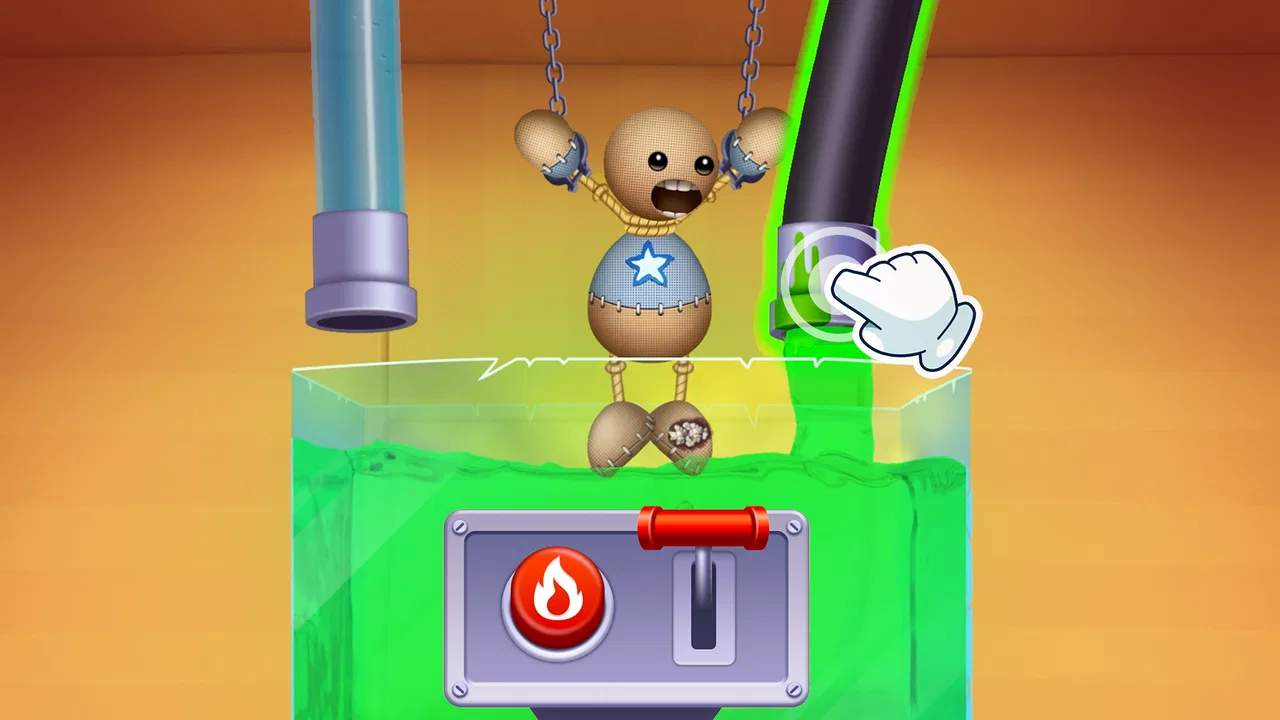
The ragdoll presentation is the main source of humor. Movements are deliberately exaggerated, and the pleasure comes from seeing how the character reacts to whatever I do next. The appeal is not subtle, but it is easy to understand. I do not have to study a tutorial or learn a complicated ruleset to appreciate the visual response.
During the first week, experimentation carries the experience. I found myself trying different sequences rather than repeating one action: changing the direction of a toss, combining interactions, and checking whether a familiar object produced a different result when used from another position. The most enjoyable part is discovering reactions, not completing objectives. That distinction matters because it explains both the game’s charm and its eventual limitation.
The free entry point also lowers the risk of trying it. The game is available at no upfront cost, while optional purchases range from $0.99 to $84.99 per item. I would approach those purchases carefully during the first week. The early appeal comes from the basic interaction loop, so I would first decide whether that loop itself is entertaining before spending anything on extra content or convenience.
A good fit for short, private play
I can see this working well for someone who likes casual physics games but does not want the pressure of a timer, leaderboard, or opponent. It is also a reasonable choice for players who enjoy harmless cartoon violence as a visual gag rather than as a serious combat system. The Teen content rating is worth taking seriously: although the presentation is playful, the entire premise revolves around repeatedly attacking a character.
For a realistic everyday example, imagine coming home mentally tired after a long day. You have no interest in starting a large role-playing game, but you want five minutes of something active. This is where the game makes sense. I can open it, create a few ridiculous reactions, laugh at an unexpectedly dramatic result, and put it down without feeling that I have abandoned an important task.
It is less suitable for a shared family tablet if younger children may use it unsupervised, not because the controls are difficult, but because the tone is built around hitting and damaging the puppet. It is also a poor match for anyone looking for a calm puzzle experience. The interaction may be simple, but the subject matter is intentionally aggressive.
What makes the interaction more interesting than it looks
One useful way to play is to treat each session as a small experiment. Instead of immediately repeating the strongest-looking action, I try to vary one element at a time: position, timing, direction, or the order in which I use available objects. This makes the game feel less like mindless tapping and more like testing a toy with unpredictable physical responses.
Another practical habit is to set a stopping point before opening it. Because there is no obvious natural conclusion to every session, it is easy to continue simply because the next interaction is only one tap away. A short self-imposed limit protects the game’s strongest quality—quick entertainment—from turning into repetitive scrolling and tapping.
I also recommend judging items by the kind of reaction they create rather than assuming that the most powerful-looking option is automatically the most fun. The enjoyment often comes from surprise and visual timing. If every session becomes an attempt to produce the biggest possible effect, the range of things to try can feel narrower very quickly.
Whether it earns month-to-month space
The first month is where the game has to prove more than novelty. By then, the basic joke is familiar, and the question becomes whether experimentation continues to offer enough variety. In my experience, the answer depends heavily on personal taste. Players who enjoy sandbox-like repetition may keep finding small combinations to test. Players who need clear progression may feel finished once they have seen the main style of reaction.
That makes the game different from the usual alternatives in the action category. A conventional fighting game gives me opponents, rounds, goals, and often a reason to improve my technique. An arcade action title may offer stages and a score to beat. A puzzle game gives each challenge a solution. Kick the Buddy: Second Kick does not need those structures to deliver its intended amusement, but it also cannot replace them for players who want measurable progress.
I would compare it more closely with a digital toy than with a full action campaign. A toy can remain enjoyable without adding new objectives, but only if the physical interactions stay satisfying. Once I understand the range of responses, the burden shifts to my imagination. The game does not always push me toward a new task; I have to create the reason to continue.
That is a real strength for relaxed play. I can use it differently depending on my mood, with no correct route through a level. It is also a weakness for long-term retention. When I return after a gap, I may enjoy a few minutes, but I do not necessarily feel a strong pull to maintain a daily habit.
The game’s broad reach suggests that the concept has found a large audience: it has passed 100 million installs, with an average rating of 4.4 from around 1.1 million ratings. Those figures show that the simple format is widely appealing, but they do not change my personal conclusion about longevity. A popular short-session toy can still be something I use occasionally rather than something I keep at the center of my gaming routine.
Where recurring value comes from
The recurring value comes from three places. First, the game is easy to resume because there is no demanding setup. Second, the physics-based humor can produce different outcomes from similar actions, which gives experimentation some life. Third, it serves a specific emotional purpose: it lets me release a little frustration through exaggerated cartoon chaos without requiring concentration.
That third point is more important than it may sound. I would not call the game a wellness tool, and I would not use it as a substitute for dealing with real stress. Still, as a brief diversion, it can provide a clean break from a repetitive day. The value is comparable to doodling or playing with a desk toy: modest, immediate, and dependent on the moment.
For monthly use, I would keep it installed if I regularly enjoy that kind of break. I would remove it if I notice that I am opening it automatically and closing it almost immediately. The game does not become more rewarding merely because it is available every day. Its best role may be occasional rather than habitual.
Platform and setup considerations
The Android version supports devices running Android 7.0 or later, and the current version is 1.14.1524. That makes compatibility reasonably broad for older Android phones, though device performance can still affect how comfortable any physics-heavy interaction feels. I would check the operating system before recommending it to someone using an older handset, especially if that device already struggles with games.
Because the game is free to start, a sensible approach is to install it, play through the initial curiosity, and evaluate the experience before considering purchases. The price range of optional items is wide enough that impulse spending deserves attention. I would not treat an optional purchase as a solution to boredom with the basic loop; if the core interaction has already become repetitive, buying more is unlikely to fix the underlying issue.
Playgendary Limited is the developer behind the game. The Teen rating, free access, and optional purchases together describe an experience that is easy to sample but should still be approached with awareness, particularly on a device shared with children or linked to a payment method.
Maintenance burden and reasons fatigue appears
The maintenance burden is low in one sense and noticeable in another. There is no complex character build for me to manage, no long campaign to remember, and no demanding schedule I must follow. That makes the game easy to leave alone and revisit. I do not feel punished for missing several days.
On the other hand, the lack of a strong long-term structure means I have to maintain my own interest. I need to invent new experiments, vary the way I interact with the puppet, and accept that a session may last only a few minutes. If I expect the game to provide a fresh objective every time I open it, fatigue arrives quickly.
The first source of fatigue is repetition. The basic interaction is intentionally narrow, and its charm comes from presentation rather than depth. Once the surprise fades, repeating similar actions can feel mechanical. This is not a flaw against the game’s stated purpose, but it is a limitation that becomes obvious when I try to use it as my main action game.
The second source is the absence of a satisfying finish line. In a stage-based game, I can complete a level and feel that my time produced a result. Here, stopping is mostly a personal decision. Some players will appreciate that freedom; others will find it difficult to justify returning when there is no clear new challenge waiting.
The third source is the tone. The humor depends on repeatedly mistreating a ragdoll character, and that premise will not appeal to everyone. Even with a cartoon presentation, some players may find the loop unpleasant rather than funny. The Teen rating is therefore not just a technical label to ignore; it helps identify the audience that should think about whether this style of action is comfortable for them.
A fourth issue is spending pressure. I did not need purchases to understand the game, which is encouraging, but the presence of items priced as high as $84.99 means I would keep purchase controls in mind. The safest workflow is to play with the free experience first, decide whether the game has earned repeat visits, and only then consider a small optional purchase if it genuinely adds something I want.
Who should skip it
I would skip this game if I wanted a story, a competitive ladder, cooperative play, or a campaign with a clear ending. I would also choose a traditional fighting game instead if my goal were to improve timing, learn matchups, and measure progress against increasingly difficult opponents. A physics puzzle would be a better alternative for someone who enjoys experimentation but prefers problems with defined solutions.
It is also not the right choice for players who dislike repeated cartoon violence, even when the presentation is exaggerated. The game does not hide its central gag, so there is little reason to expect the tone to become something fundamentally different later.
Conversely, I would recommend giving it a try if you enjoy interactive toys, absurd physics, and short sessions that do not demand commitment. It is especially appealing when I want control without responsibility: I can perform an action, observe the result, and move on. That is a narrow purpose, but it is a clear one.
How I would keep it enjoyable
My preferred routine is to avoid treating it like a daily checklist. I open it when I specifically want quick, silly interaction, then stop before the reactions become background noise. I also change the goal from session to session. One time I might focus on unusual timing; another time I might explore how different objects behave; another time I might simply play until the joke stops landing.
This approach protects the novelty better than constant use. It also makes the game easier to judge honestly. If I only return because it is already on my phone, that is not the same as finding lasting value. If I occasionally think, “This is exactly the kind of pointless distraction I need,” then it has earned its place in a limited role.
My long-term verdict
Kick the Buddy: Second Kick succeeds as a compact action toy, not as a complete action game. I like its immediate controls, exaggerated reactions, and ability to fill a short idle moment without demanding preparation. The free starting point makes it easy to test, and the broad Android compatibility helps older devices get a chance to run it.
Its weaknesses are equally clear. The novelty can fade, the loop offers limited measurable progress, and the game relies on the player to supply fresh reasons to continue. Optional purchases also mean I would avoid spending quickly, especially if the basic interactions are already beginning to feel repetitive. The Teen rating makes it a more specific recommendation than the cheerful visual style might initially suggest.
After the first month, I would keep it only if I enjoyed returning for occasional experiments rather than expecting a new adventure. For me, that means it earns a small space, not a permanent front-row position. I would recommend it to a friend who wants a funny physics distraction and understands that the experience is closer to a digital stress toy than a conventional action title.
If you want a game with missions, mastery, narrative, or a strong reason to play every day, choose something else. If you want a few minutes of uncomplicated ragdoll chaos and are comfortable with its aggressive cartoon premise, this one is easy to sample and surprisingly handy in the right moment. Its lasting value is real, but narrow: it survives the novelty phase only when you enjoy the act of experimenting for its own sake.
FAQs for Kick the Buddy: Second Kick
01What is the main objective of Kick the Buddy: Second Kick?
Kick the Buddy: Second Kick is a stress-relief game designed for players to unleash their creativity and frustration on a virtual character named Buddy. The main objective is to use a variety of weapons and tools to interact with Buddy in humorous and exaggerated ways, providing a fun and entertaining outlet for stress.
02Is Kick the Buddy: Second Kick suitable for children?
The game is rated for ages 12 and up due to its cartoonish violence and comedic approach to stress relief. Parents should be aware that while the game is meant to be humorous, it involves interactions that might not be suitable for younger children. Parental discretion is advised.
03Does Kick the Buddy: Second Kick require an internet connection to play?
Kick the Buddy: Second Kick can be played offline, making it a great option for users who want to enjoy the game without an internet connection. However, some features, such as in-app purchases or certain updates, may require online access to function properly.
04What types of in-app purchases are available in Kick the Buddy: Second Kick?
The game offers various in-app purchases that allow players to unlock additional weapons, tools, and customizations for Buddy. These purchases enhance the gameplay experience but are entirely optional, allowing players to enjoy the core game without spending money.
05How does Kick the Buddy: Second Kick handle user data and privacy?
Kick the Buddy: Second Kick collects user data to improve gameplay and provide customized experiences. The developers adhere to privacy policies to protect user information, and players can review these policies within the app or on the developer's website to better understand how their data is used and safeguarded.
Pros
- Interactive and stress-relieving gameplay.
- Wide variety of weapons and tools.
- Regular updates with new content.
- Simple controls and intuitive interface.
- Visually appealing graphics.
Cons
- Contains frequent ads and pop-ups.
- In-app purchases can be costly.
- Limited gameplay depth over time.
- Some tools require real money.
- Can be repetitive for some players.

Kick the Buddy: Second Kick
Gallery